Trump Criticizes Supreme Court on Truth Social
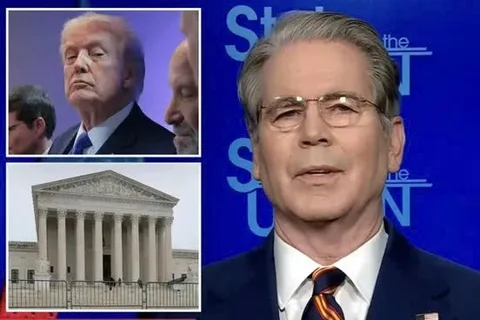
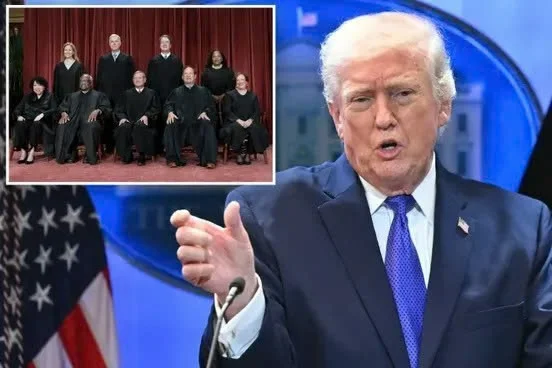
President Trump publicly criticized the U.S. Supreme Court, predicting the court might issue an unfavorable ruling in the birthright citizenship dispute after his defeat in the tariff case.
On Truth Social, President Trump wrote: "The incompetent Supreme Court is doing a great job for the wrong people… (except for the Three Greats!)" — referring to Justices Brett Kavanaugh, Samuel Alito, and Clarence Thomas, who sided with him in the tariff case.
The 14th Amendment and the Birthright Citizenship Lawsuit
He argued that the court might rule in favor of China and other countries in the birthright citizenship case, contending that the 14th Amendment was not drafted to grant citizenship as broadly as it is currently applied.
The birthright citizenship lawsuit — Trump v. Barbara — has become one of the most prominent cases awaiting a ruling. On the first day of his second term, President Trump signed an executive order to end the practice of automatically granting citizenship to most individuals born on U.S. territory.
The Wong Kim Ark Precedent from 1898
Critics argue that this policy encourages undocumented immigrants to come to the U.S. to give birth so their children can gain citizenship. During his first term, President Trump's administration considered challenging the precedent set by United States v. Wong Kim Ark (1898), in which the Supreme Court determined that children born in the U.S. to foreign parents are granted citizenship under the 14th Amendment.
The court is scheduled to hear oral arguments on April 1.
IEEPA Tariff Ruling and Section 122
Previously, the Supreme Court ruled that President Trump could not use the International Emergency Economic Powers Act (IEEPA) to impose global and country-specific tariffs. This act does not mention tariffs and had never been used for that purpose before.
Following the ruling, President Trump invoked Section 122 of the Trade Act of 1974 to impose a global baseline tariff of 15%, up from 10%. Tariffs under Section 122 expire after 150 days if Congress does not extend them. The administration is seeking other legal bases to maintain its tariff policy.
Trump Claims More Power After Ruling
President Trump further wrote that the court's ruling unintentionally granted him more power than before, including the ability to use licensing mechanisms for foreign countries, even if he cannot collect licensing fees in the way he desired.
Developments in the birthright citizenship case continue to draw attention ahead of the April arguments.