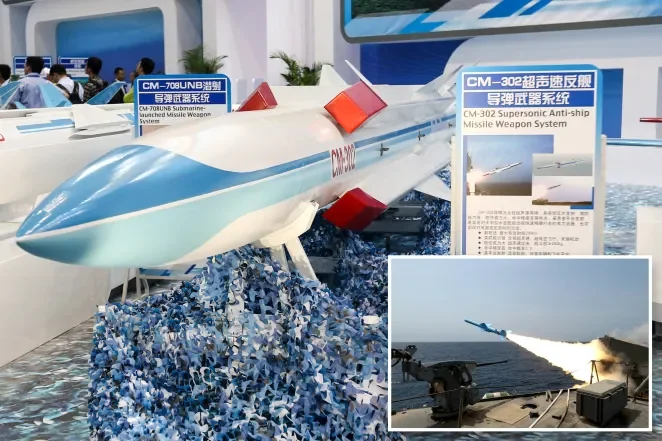
Iran Set to Acquire Hypersonic Cruise Missiles from China
According to international sources, Iran is nearing a deal to sign an agreement for the purchase of CM-302 hypersonic anti-ship cruise missiles from China. This move comes amid escalating tensions as the United States increases naval pressure in the Middle East and warns of military action if Tehran fails to reach a new nuclear agreement.
The CM-302 missile, manufactured by the China Aerospace Science and Industry Corporation (CASIC), is considered one of the most advanced anti-ship weapons in the world. With a range of approximately 290 km, low-altitude flight capability, and extremely high speed, this type of missile can evade modern air defense systems and is capable of sinking large warships such as aircraft carriers or destroyers.
Offensive Capabilities and a Shift in the Military Balance
Experts believe that if this deal is finalized, Iran's offensive capabilities will be significantly bolstered, posing a direct threat to U.S. naval forces in the region. Danny Citrinowicz, an expert at Israel's Institute for National Security Studies, stated:
"This would be a game-changer if Iran has hypersonic capability to attack warships in the region, because this type of missile is inherently very difficult to intercept."
Negotiation Context and Party Reactions
Discussions regarding this deal have lasted at least two years, but the negotiation process accelerated after the recent conflict between Iran and Israel. Iran's Deputy Defense Minister Massoud Oraei reportedly traveled to China to push for the finalization of the agreement, aiming to replenish depleted weapon stockpiles following airstrikes.
While Iranian officials assert that this is an opportune time to utilize military agreements with allies, China's Ministry of Foreign Affairs stated that they are not aware of these negotiations. If confirmed, this would be the largest military deal between the two countries, contravening international arms embargo efforts previously imposed on Tehran.
In parallel with Iran's moves, the U.S. continues to bolster its military presence by deploying the aircraft carrier USS Gerald R. Ford to the region. President Trump issued a warning about the possibility of military action, while Tehran declared that any attacks against them would lead to fierce retaliatory strikes targeting U.S. personnel and allies.
In addition to anti-ship missiles, Iran is also reportedly negotiating to purchase more air defense systems and anti-satellite equipment from China. The regional situation continues to be closely monitored as all parties involved maintain rigid stances with no signs of de-escalation.